August 2025
1972 Norton Commando 750
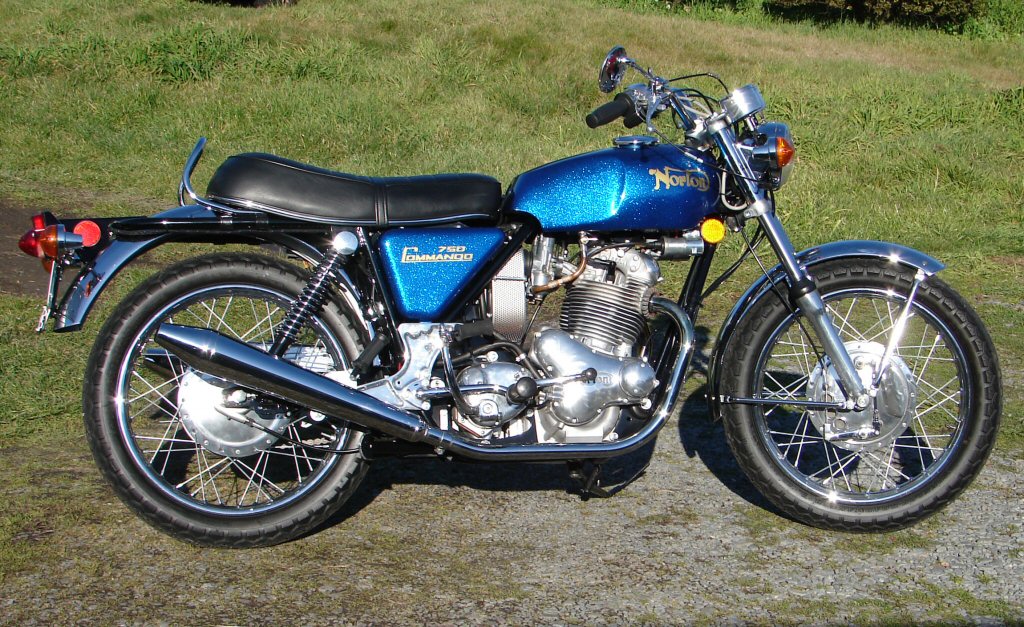
With its drum front brake and fabulous metallic paint this is a very authentic looking example of an early Commando. My first experience of riding on one was as pillion on an apricot metalflake fastback, and it was indeed a revelation. Hard to say now if it was the available grunt or the smooth delivery of it, but I was super impressed.
This one arrived with some tuning issues, and I could hear from the idle that it was probably receiving a bit too much fuel, so the first thing I did when it had cooled a bit was to pluck the spark plugs for an eyeball.
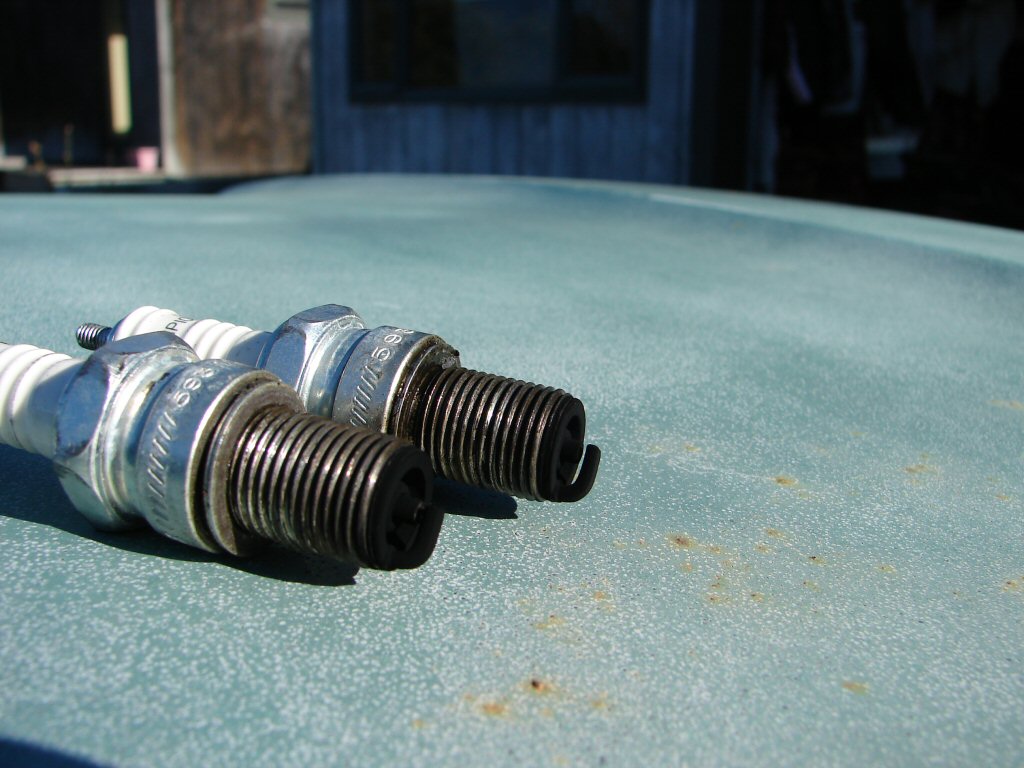
Sure enough they were looking super sooty, so they got a wire brush and a squirt of contact cleaner. They then went back in and I kicked the engine into life. It certainly behaved like there was a surplus of fuel, and revving it elicited two visible black exhaust plumes, so this looks a bit more severe than just a tuning issue.
I checked the float levels by using the ticklers while the fuel was turned off, and both ticklers made contact at about the same depression, so it did not seem to be a flooding related issue either. I had asked the owner what method he used for cold starting, so I would be able to emulate it when required, and he said that choke had never been necessary in the normal order of things.
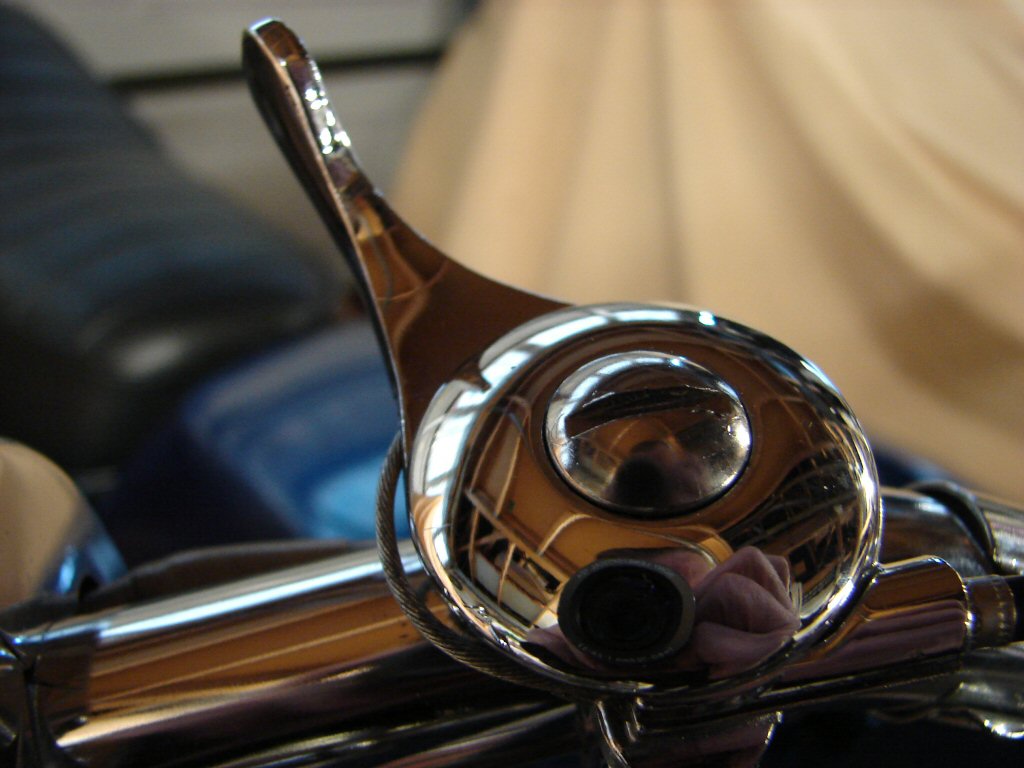
I pushed the bike into the shed and contemplated removing seat and tank, so that I would be able to pluck the tops off the carbs, then decided to just check the operation of the choke lever. Behold, the inner cable decided to make its way out of orbit, suggesting that there was no tension on it at all. Nor there was, so it appears that the upper choke cable may have escaped the junction box and therefore both chokes are probably permanently fully on.
After 50 years of living with British motorcycles it is always a mistake to think that you have seen it all. Even problems with the same syptoms can find new ways of presenting such that while you know what must be happening in most part, you can still be totally puzzled when you go searching.
Such is the case here, as when I uncovered the choke cable and its various parts, it seemed initially stupifying that it could be doing what it was. It was absolutely obvious that the chokes were staying on, and I could lift the cables at the top of the carb and raise them up easily, and they would then settle back down to fully on position even while the cable at the lever end was fully tight. I opened the junction box and just stared at it - as in - what the hell.?
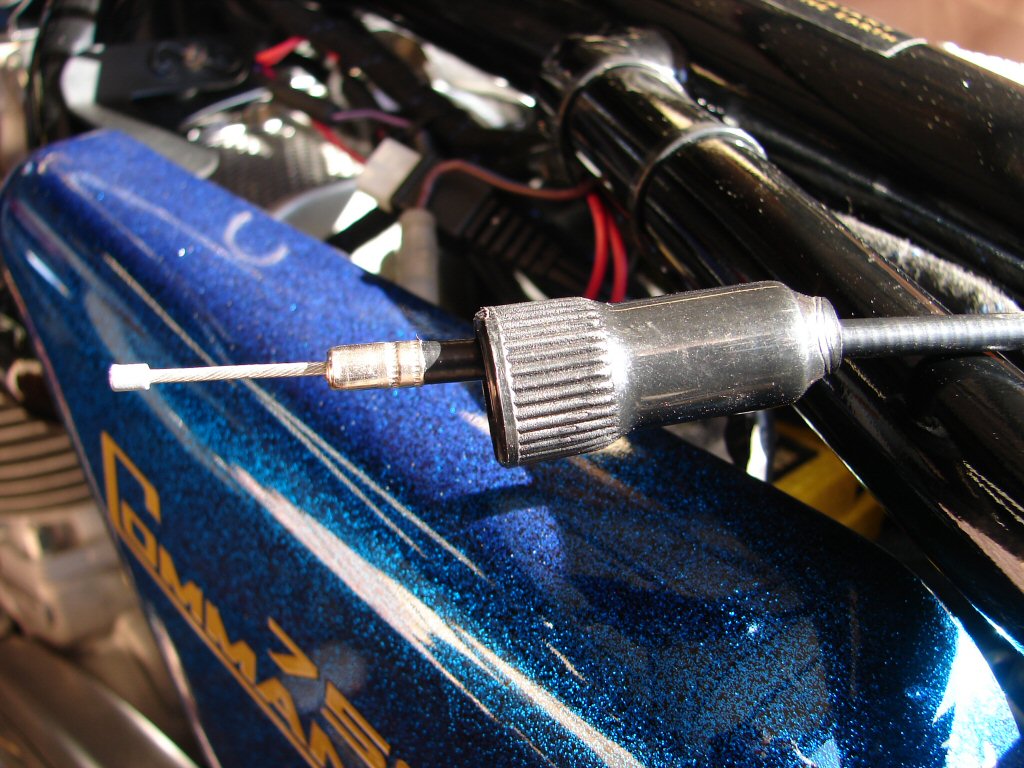
And of course the penny dropped. You just have to eyeball things and pretend that you are looking at a mechanism with no previous experience of it, and figure out how it is meant to operate. The fact that I could not pull the cable out of this end of the junction box was the 'click' in my mind.
The ferrule on the end of this cable is at the smallest end of its tolerance, while the hole in the end of the junction box is at the largest, and even though I had to use WD40 and a punch to drive it out, the ferrule has gradually worked its way into the plastic until it finally popped right through, so now the cable at the choke end can be fully tight but all it has done is tighten the outer cable to the small piston inside the junction box, while not even attempting to draw the piston and lift the chokes.
The ultimate trap for young players.!
As can be seen there is a tiny groove toward the tail end of the ferrule, and I thought a small circlip might gain enough traction to prevent the ferrule pulling through in future, but I could not find one so small, and it seemed the groove was not well enough formed to provide the grip needed. I considered running a thread along the outside of the ferrule and using a self-locking nut, which is still a possibility, but amongst my washer collection I found a tiny spring washer which was a very firm fit, and using a tiny blade inbetween its two ends I was able to manoeuvre it to where the groove is.
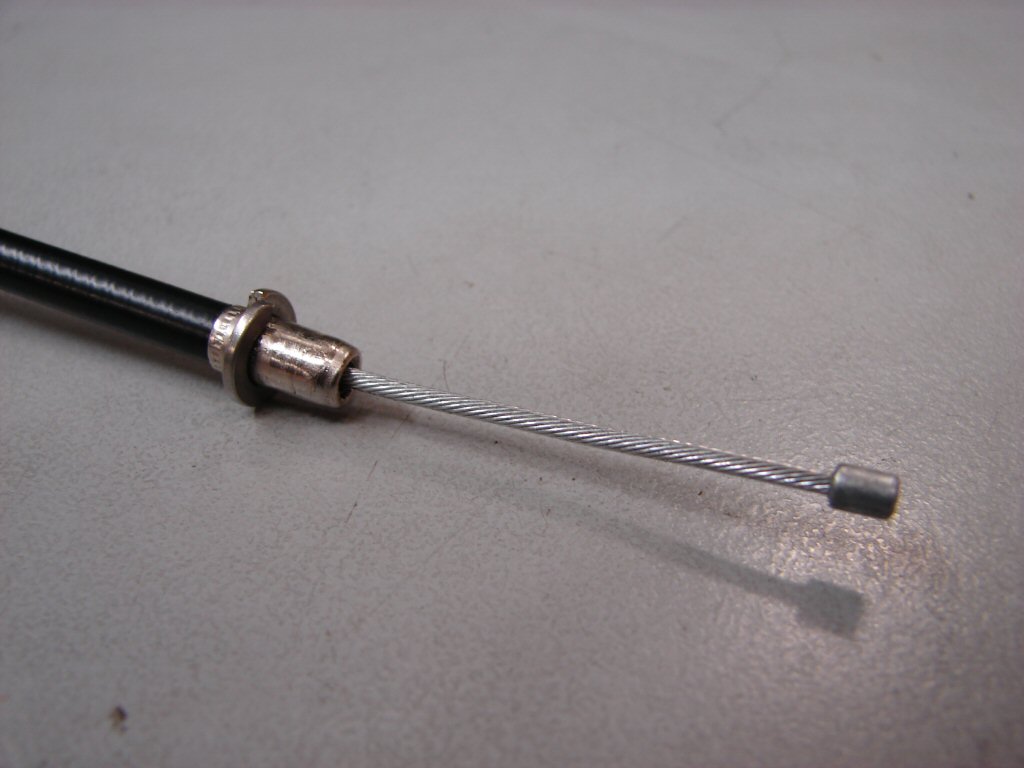
I figure that a smear of silicone sealant would be prudent as an additional measure, as there is a considerable amount of tension required to hold the chokes permanently up, and I would want this to be a permanent cure rather than a temporary one.
Well that was a fail, as the ferrule still managed to dislocate both the spring washer and move back inside the junction box. Seems we need to replace the junction box, or, as I often do, remove the entire choke assemblies other than the top cable which keeps everything looking original. Most chokes are merely an unnecessary decoration which makes business at the carb quite a bit more complicated than it needs to be while adding extra effort into throttle operation. Will see what option the owner prefers.
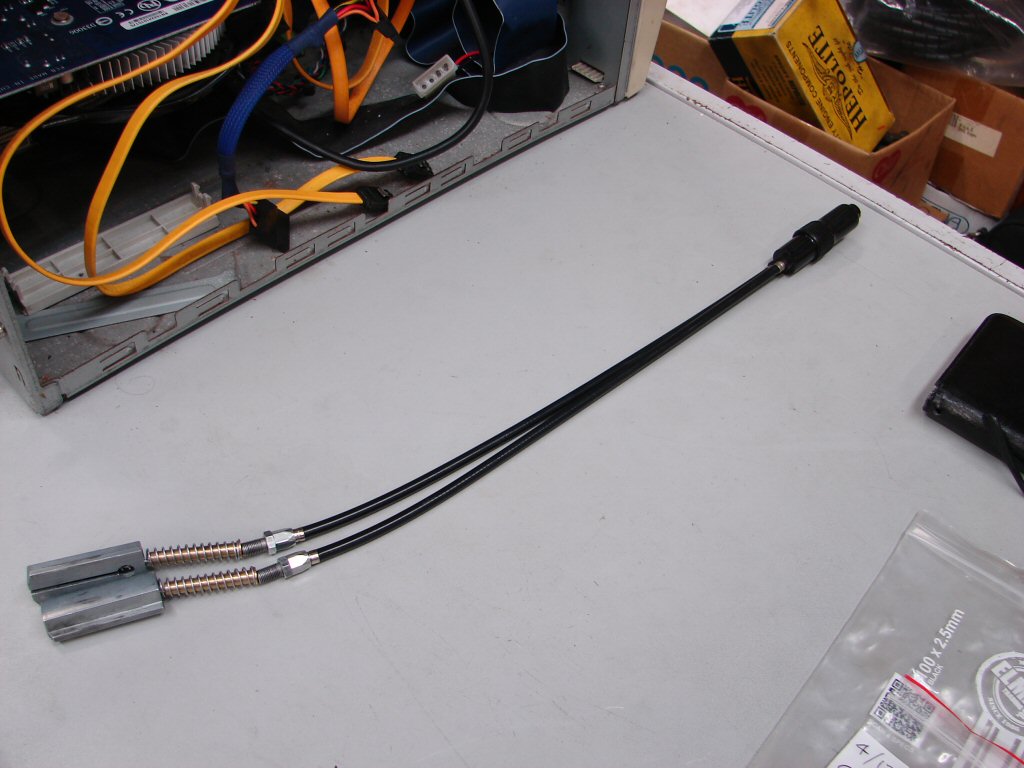
Problem solved and with an easy reverse cure should it ever become necessary. All the parts are in as-new condition, but sadly not all new parts are as accurately produced as they once were, and so it is that problems such as this occur.
On the other hand, the clutter around the carb tops is greatly reduced, and the throttle cables have a less obstructed run without the second junction box in the plot, so action is improved.
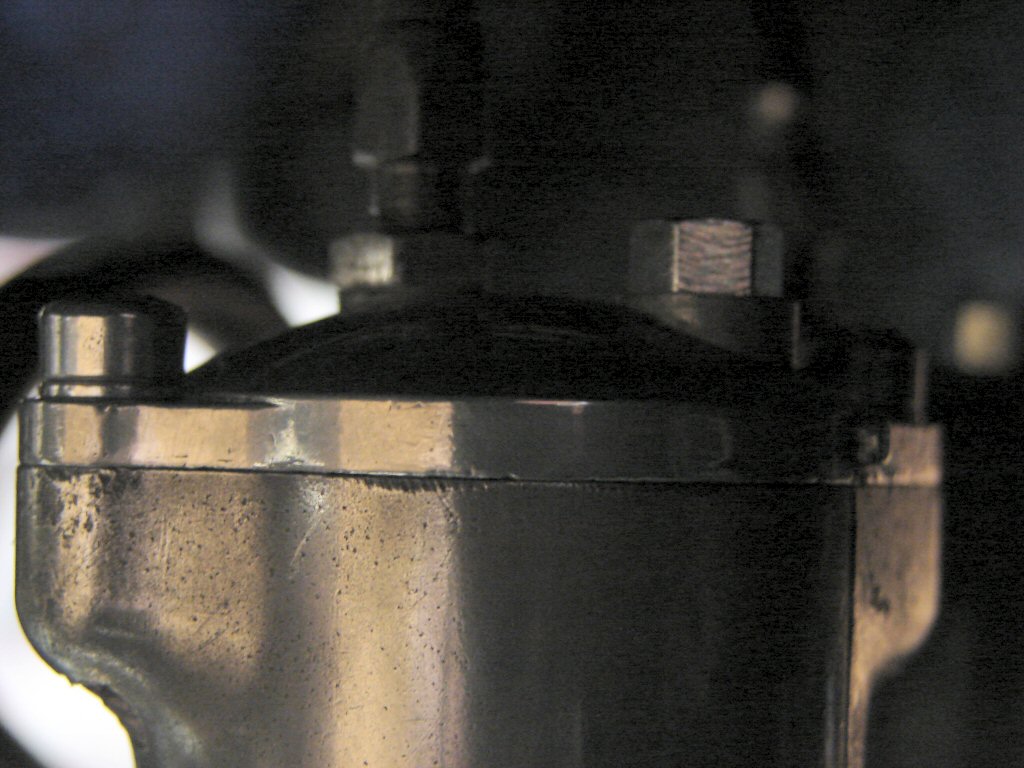
I am no purist myself, and all remaining visual clues as to there ever having been chokes on my triples are long gone, but with the triples said bits are hardly on prominent display so the appearance still looks original.
With the choke control on the bars though I leave the now unused cable in place to preserve the look. It is a cinch to remove them both, but that is an easy manoeuvre for the owner to accomplish should they choose. I like to leave them pretty much as I find them.
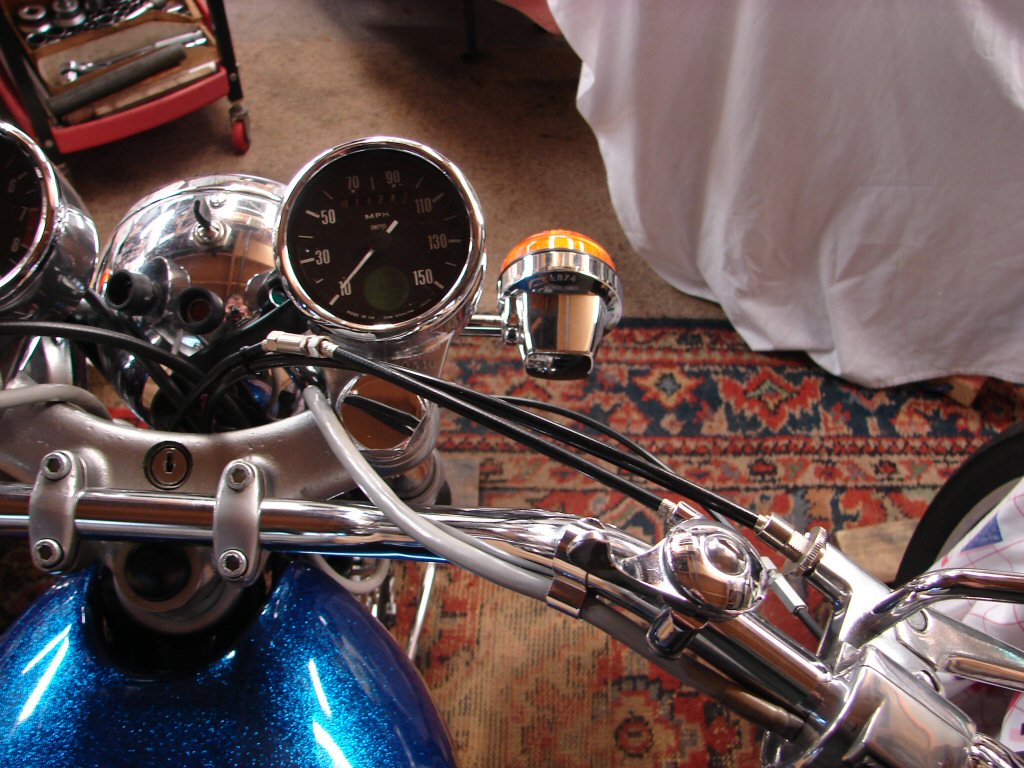
All that remains to be done is a careful carb tune one at a time, so I shall warm it up tomorrow and do just that.
The warming up was not without difficulty as it was reluctant to start, and while there was a spark at both plugs when out it eventually lit up on only one cylinder, but cleared quite quickly now running. I imagine that these plugs could be compromised having had a diet of too much fuel for some time, and it would be prudent to replace them.
I always forget how easy it is to manoeuvre these bikes around in the shed, both their lack of weight and their very slim stature.
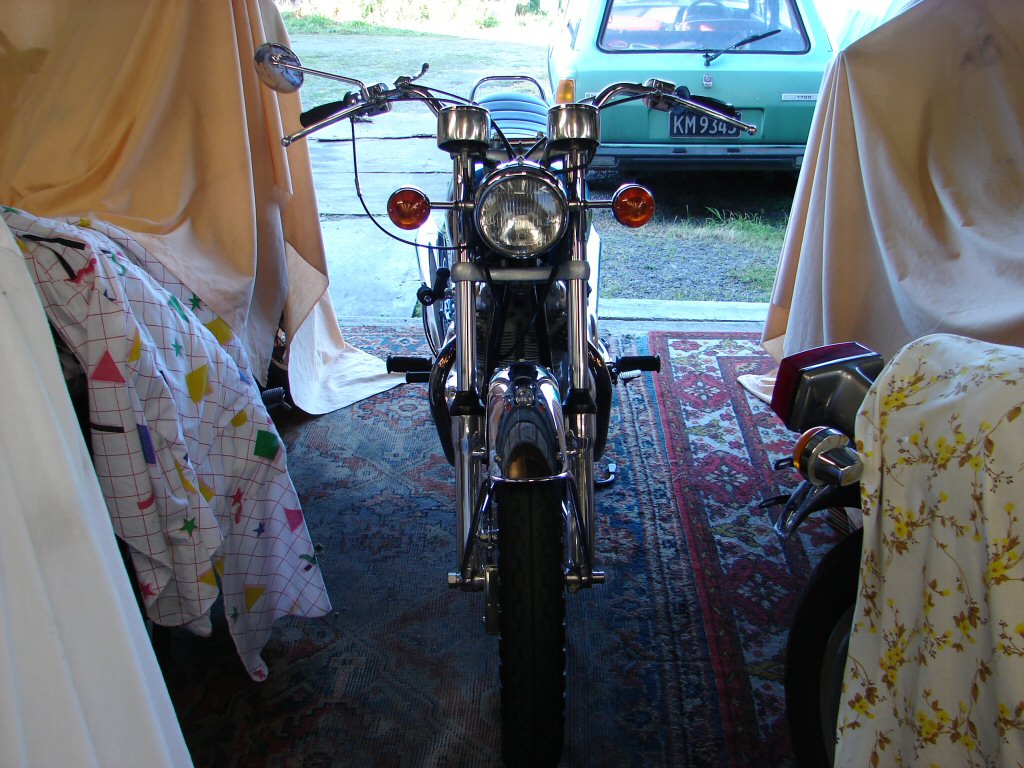
Once warmed up the bike started happily on one cylinder - deliberately this time - while I adjusted the corresponding carb, then again when I swapped sides. This process means setting each carb for a faster idle being only half its former self, and the idea is to reduce the idle speed by the same amount on both carbs once all is restored. After that it is a matter of trying to smooth out the mixtures while letting the exhaust tell me what are the happiest settings.
A telltale is a spitback when quickly opening the throttle, indicating that side is still a bit lean. I let it cool down for an hour then started it again, and it was a much happier unit, so I think we are there.
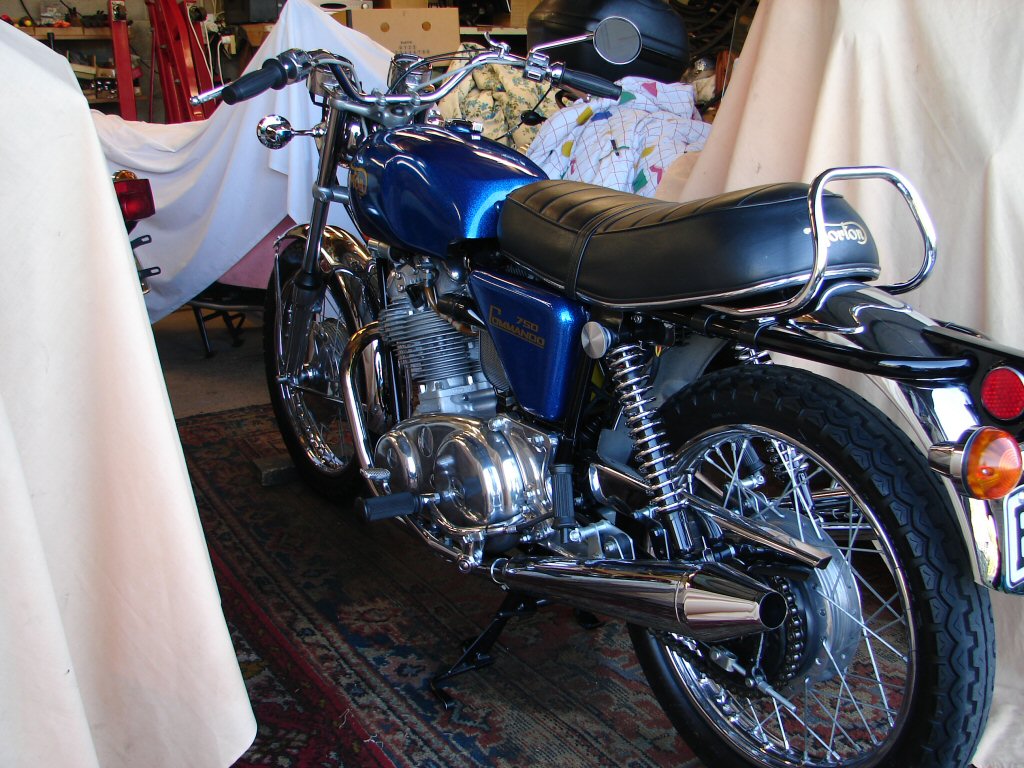
I would still change the plugs as a preventative measure, but It seems the chokes will not be missed, if todays rather chill ambient temp is any gauge.
Fabulous machine.

